
Some stories, buried in time, cry out to be told. “The St. Patrick’s Eve Tragedy 1956” is one of them. Four brave sailors froze to death that night in a blinding blizzard.
In late October 2007, daughter Jenny and I were attending an Andover Alumni Council meeting. After dinner she arrived at my table with a young man in tow.
“Dad, meet Harry Flynn. I think you were in the Navy with his dad.”
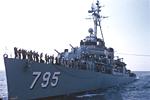
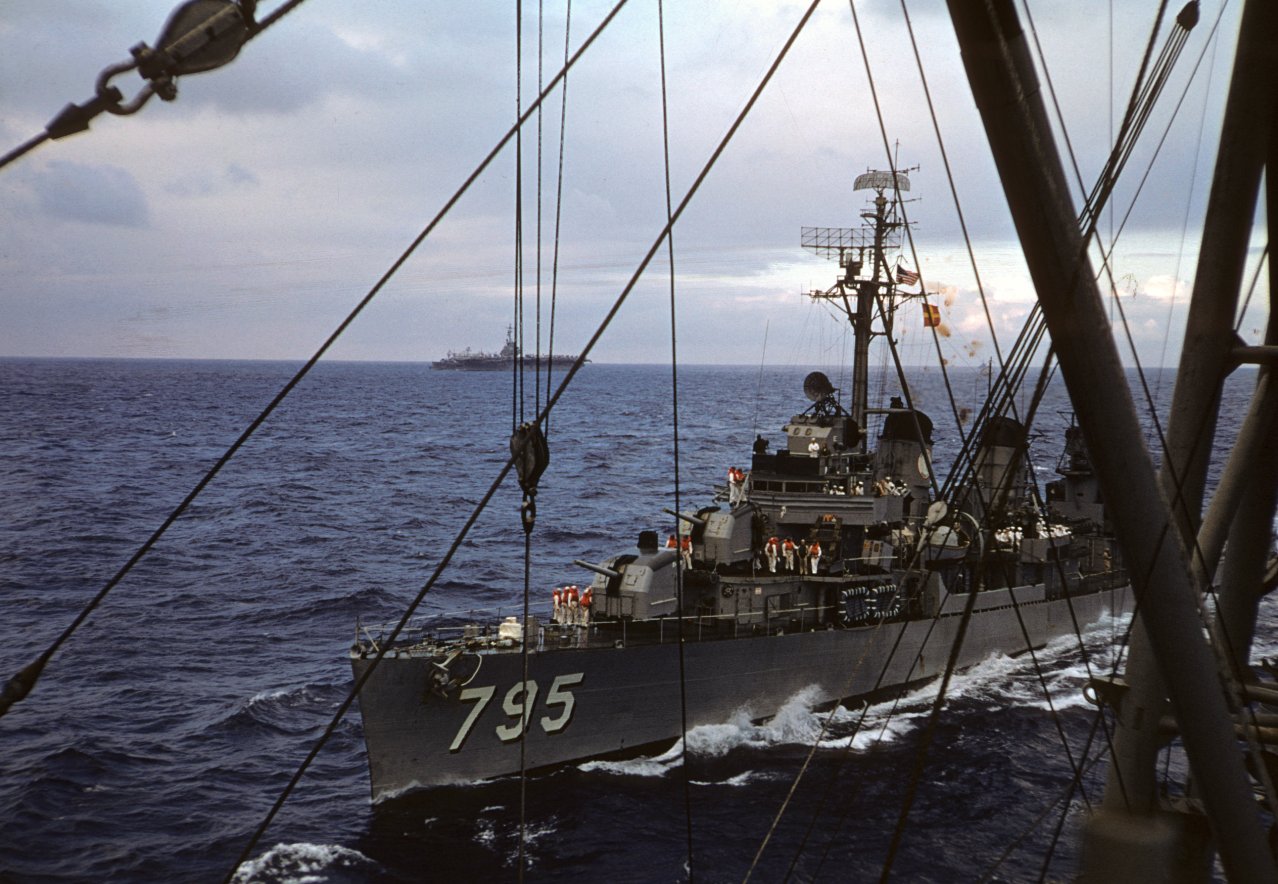
Indeed I was. We were roommates aboard the USS Preston (DD 795) in 1955. I had not spoken with Harry Sr. in 52 years. The next morning, between meetings, Harry called his dad and handed me the phone. The years vanished as we caught up. What a warm feeling watching our kids talking as we spoke.
As a result of that chance encounter, we began to swap stories. One of his particularly caught my attention; “Safe Harbor – Not,” which described the harrowing events of St. Patrick’s Eve 1956 in Newport Harbor, Rhode Island.
Months earlier, another chance encounter at the 19th Hole of our golf club on Long Island, conversation turned to that same ill-fated day. Doctor Petit, a neighbor, had also been home ported in Newport. Doc, then a Medical Corpsman aboard the Destroyer Tender, Cascade (AD 16), added a gripping eyewitness account of the same terrifying events.
Their stories triggered my own memories. I couldn’t get them out of my head; how two old friends from different parts of my life had both been there, at the scene of the tragedy; how I had almost been there with them; why all three of us had been spared, while our fellow shipmates hadn’t been nearly as lucky. I spent days researching what happened, tracking down long forgotten newspaper articles from the Newport library and piecing together events.
* * *
St. Patrick’s Day has come to be known for parades, parties and celebration. For four brave Navy men, the date in 1956 was just the opposite.
Excerpts from “Safe Harbor”…
My friend Harry had been attached to the Commodore’s staff headquartered on the USS Picking (DD- 685), temporarily based in Newport. That night, Harry had the staff watch. “A lot of people had already left the ship on liberty,” he recalled. “We were nested together, four Fletcher-class destroyers, 21 hundred tons of seagoing greyhounds. I was waiting for my fiancée and her cousin to visit for supper, by launch, return and drive back to Boston.
“We had arrived from the Charleston Navy Shipyard in Boston after our overhaul. A ship just out of the yard is always in a state of flux. New people and old hands are getting familiar with or reviewing their duties. This time everything worked against us.” Adding to the problem, a number of senior officers were not aboard the ships at that time, leaving their junior counterparts in charge.
Harry said that the ship’s crew could tell a storm was coming, but storms in Newport in February weren’t exactly headline news. He describes his first encounter, “As we rounded Nantucket Light on the trip from Boston, the hatch above my bunk sprang open and water from the bow flooded the sleeping area. I leapt up and headed topside.”
On St. Patrick’s Eve, the storm came up quickly and violently. The winds howled, and snow turned into blizzard with 70 mile an hour winds overnight.
In Harry’s words: “Storms aren’t unusual, but never fun. We sent the liberty launch in at four o’clock (1600 hours). The wind had come up and the trip was very rough. When the boat crew returned for another trip, the 50-foot liberty launch landed between the sterns of the Preston and the Irwin. I went to the Commodore, my boss, and suggested that he decide when to cease boating. It was getting very rough out there. He said to stop them after the next boat returns. I went to the stern of the Irwin where the launch was tying up.”
Meanwhile, crewman Kenneth R. Kane, a fireman rate from New York City, was part of the crew manning the 50-foot motor launch that was being moved to a more sheltered position behind the nest of four destroyers tied together and moored to a buoy (Mike).
“A gust of wind ripped through the air, tossing the launch so high on the waves that its keel could be seen from the destroyer deck.
“As the launch neared the USS Preston, two of the boat crew jumped across to board the destroyer. When Kane tried to follow, he fell into the freezing water. The men aboard the ship yelled to throw him a line, but a rope could not be found. Suddenly, the launch heaved high on another huge wave and crashed down on Kane likely breaking his back. Crewmen from the Preston scrambled down and grabbed Kane by his life jacket, but he was torn from their grasp when a strap broke. He slipped through the jacket and disappeared into the churning water, leaving the sailors holding the empty jacket. The liberty launch drifted away.
Officers aboard the Preston, tied outboard in the 4 Destroyer nest, quickly ordered out a whaleboat to aid in the rescue, with five brave men aboard. Two of them, Lt., jg, Juergens and Reese B. Kingsmore, boarded the 50-foot motor launch, restarted its engine and returned to the Preston.
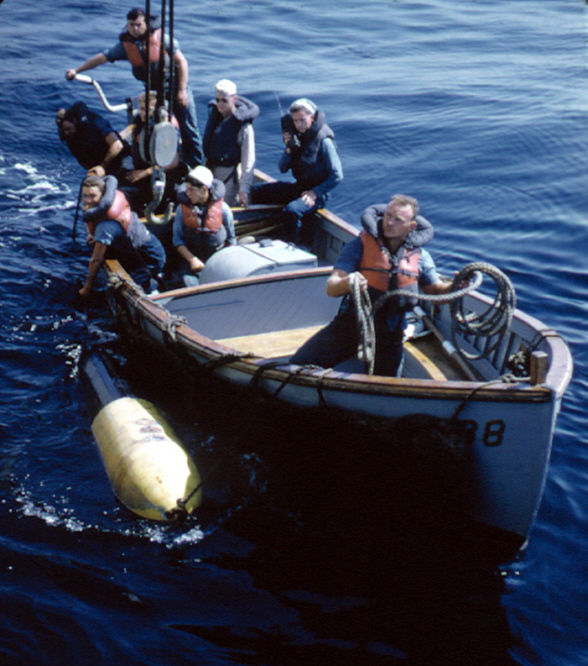
Whaleboat similar to the one used by the men of the USS Preston
The others: Moore, Britton and Hutchinson stayed in the whaleboat and kept up a vain search for the missing Kane. Moore served as coxswain, although that was not his normal duty. Before he left the Preston, he told shipmates he was going along “to make sure everything went right.”
As Harry recalled: “The men set out into the now swirling snow. The wind had come up with a wild ferocity and the heavy snowfall limited vision to a few feet from the nest. I reported back to the Commodore who wanted me to stay on the situation and report to him. There wasn’t much to report for some time. I stayed in the Ward Room, with an Ensign I didn’t know too well and his girlfriend aboard for a visit. The storm was wicked that night and we were constantly worrying about the nest breaking up or drifting.”
Tragically, Harry was right to worry. My friend and bar mate from Long Island, Doc Petit, also in the harbor that night, witnessed the second, somber part of the story: “As dawn broke on St. Patrick’s Day, the three-man crew of the Cascade’s Gig (another whaleboat) and I got underway and started to search for the boat from the Preston.” Doc and his mates traveled down the bay, looking for the brave men who had willingly put their lives on the line for another.
One of Doc’s crew finally spotted the whaleboat, washed up on the shore of the Douglas Estate, on Ocean Drive, near the mouth of the harbor. As they approached, they found the bodies of Moore, Britton and Hutchinson, “their cherry red faces frozen, grotesquely contorted in death.” The three valiant sailors had died from exposure while searching for Kane. Their 26-footer was washed ashore, miles downstream. The Newport Daily News later reported it was the worst storm since possibly1938.
* * *
“George! George! Wake up. Deanie Gilmore just called to see if you were all right.” She had heard on the radio that there had been a terrible accident aboard the Preston. Mother was standing next to my bed.
I woke up from a sound sleep at my parents’ house in Brightwaters Long Island. I was home on a 72-hour pass from my new ship, the USS Abbot (DD 629), having recently transferred from the USS Preston. Both ships had been undergoing updates and repairs at the Charleston Navy Ship Yard in Boston. The Preston and the three other ships in her Division were scheduled to leave for the West coast to join the 7th Fleet for assignment in the Pacific. The Abbot was part of the 6th Fleet and would remain in the Atlantic with the 3 remaining destroyers in our division, operating out of Newport, RI.
I knew instinctively that some of the men in my old division had to be involved. I spent most of the morning trying to contact the base for more information. The weather was God-awful. The Abbot was due to get underway from Boston early Monday. I couldn’t take the chance of getting stuck in Newport and decided against my first impulse to go there immediately. I sent a telegram to the Captain of the Preston offering my prayers and any help I could be, still not knowing the details of the tragedy.
As the day progressed, the story unfolded. Sketchy details began to appear on the radio and TV. I finally got through to the office of the Base Commander. The Duty Officer confirmed the loss of four Sailors, and the fact that, indeed, three of the four had perished in the Preston’s whaleboat, trying to rescue the Sailor from the Irwin.
Sometime in the early afternoon, the names of the Sailors were released. I tuned in to the news on the radio. My heart sank as the commentator read the names: Boatswain’s Mate 2, C. Robert C. Moore of Marked Tree, Ark, Seaman Donald Britton of Bayville, NJ, and Seaman Gary C. Hutchinson of Holland, Ohio. I had been their Division Officer.
I felt helpless. My thoughts turned to the three men aboard the whaleboat. I knew R.C. Moore the best. He was a rangy, easygoing southerner, with a great sense of humor, who took his responsibilities to heart. He was popular with officers and crew alike. R.C. had taken me under his wing when I reported aboard, as a young inexperienced Ensign.
I thought of Britton and Hutchison – two squared away seamen whose promise was yet to be fulfilled. The Deck Force is the training ground from which other activities aboard, staff their personnel. They were both headed for greater responsibilities.
The whaleboat in which the men perished had been my responsibility while I was aboard. During ASW exercises, we used that same boat to retrieve spent torpedoes and return them to the subs. I had been the Boat Officer.
It had been decades since I had thought of them, and their courage. Time has not diminished the memory of their heroics. I can’t help but think it’s no coincidence that I ran into Harry and Doc, and pieced together again the story of that night. For me, it’s a stark reminder of the need to honor and remember the sacrifice of those who give their lives for another, and a reminder of how important it is to make people aware of those four brave men.
As each of us readies for the St. Patty’s day celebration, take a moment to reflect on these brave men and all the other men and women who have served to make this great holiday possible. Raise a glass to absent friends.
Some stories, buried in history, cry out to be told. “The St. Patrick’s Eve Tragedy 1956” is one of them.
George S.K. Rider
DESTROYER
Author Unknown
Over the green hills the bay lies, and after the harbor the sea,
And a grim, gray gaunt Destroyer is steaming there swiftly and free.
With a roll that strains her stanchions and a pitch that peels her paint
With a roaring red heat in her bowels that would make the devil faint
She backs on the crest of the billows, she washes her side in the trough
She ships twenty tons of ocean and then like a dog shakes it off
Her seamen cling tight to the lifelines, her black gang is gasping for air
From mess cook to skipper they curse her, but no outsider would dare
The smoke billows down on her taffrail, the white smoke unrolls in her wake
The hissing steam throbs in her boilers, but she has a speed run to make
She lurches and trembles and staggers, alive from antenna to keel
She reeks of burned oil and hot bearings and rings with the pulsing of steel
Wild winds lay symphonies topside, below crash the drums of the sea
And far to the west of the sunset, green isles call to her and to me
She is brine-caked and crowded, they call her a salty old can
But those aboard grin when they curse her and each one aboard is a man.
 Red Rider's Ramblings: Rants, reminiscences and repartee from a 93+ year-old rookie writer